Fashion StylesBuying guide
How to choose comfortable women's shoes for walking around the city
Comfortable women's shoes for city walking: how to judge fit, heel height, sole flex, upper materials, lining and care, using NHS and APMA guidance.
Start with the fit, not the size
Comfort starts with the right fit, and the rule to begin with is to buy for your larger foot. The APMA says so directly, and it adds that shoes should feel comfortable on the first try. Most people also have one foot a little bigger than the other, so try on both shoes every time.
Length is the next check. The Guy's and St Thomas' NHS page says about 1 cm between your longest toe and the end of the shoe is ideal. If your toes touch the end while you stand, the shoe is too short. Feet stretch as you walk, so that margin is not wasted room.
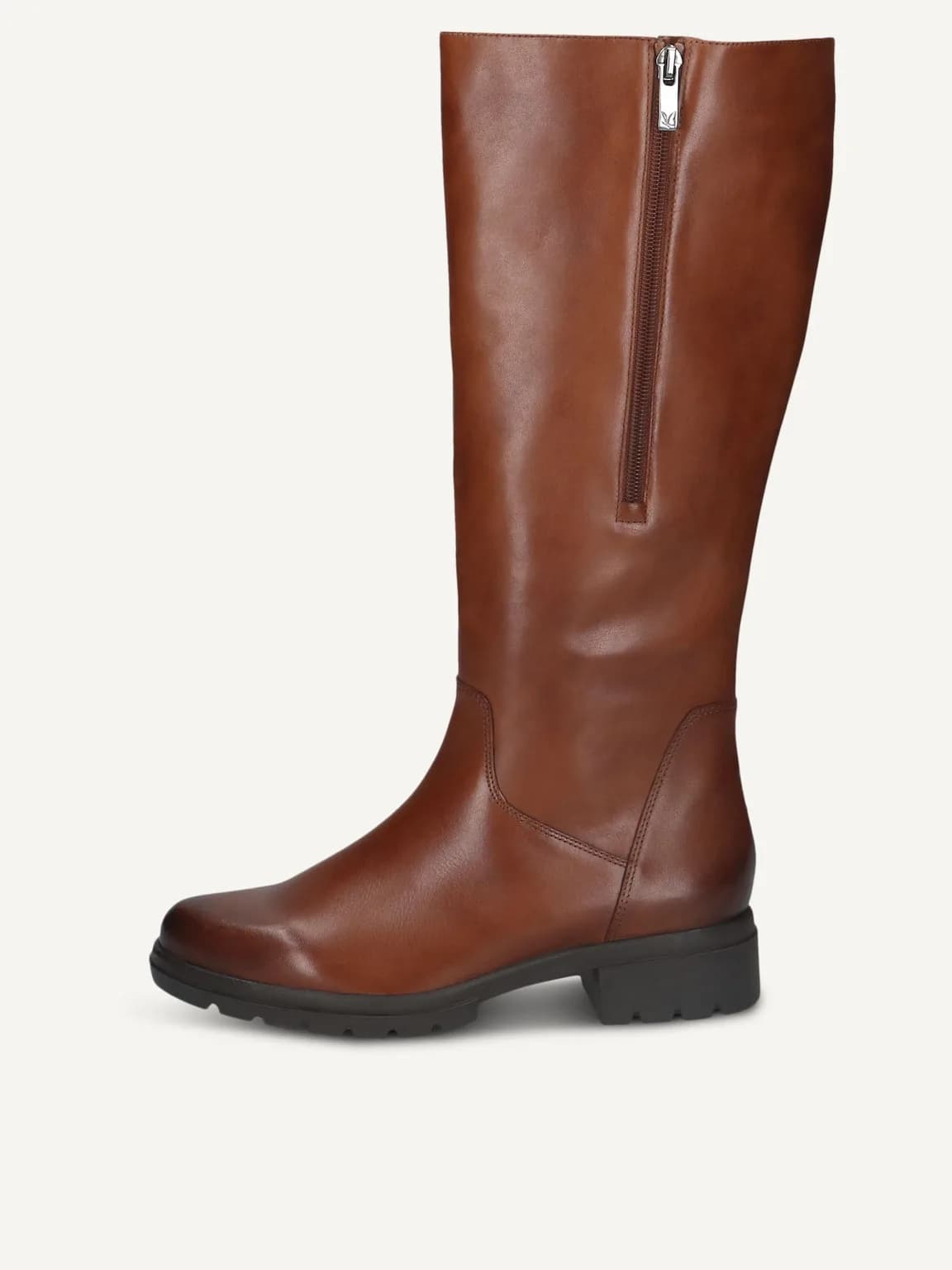
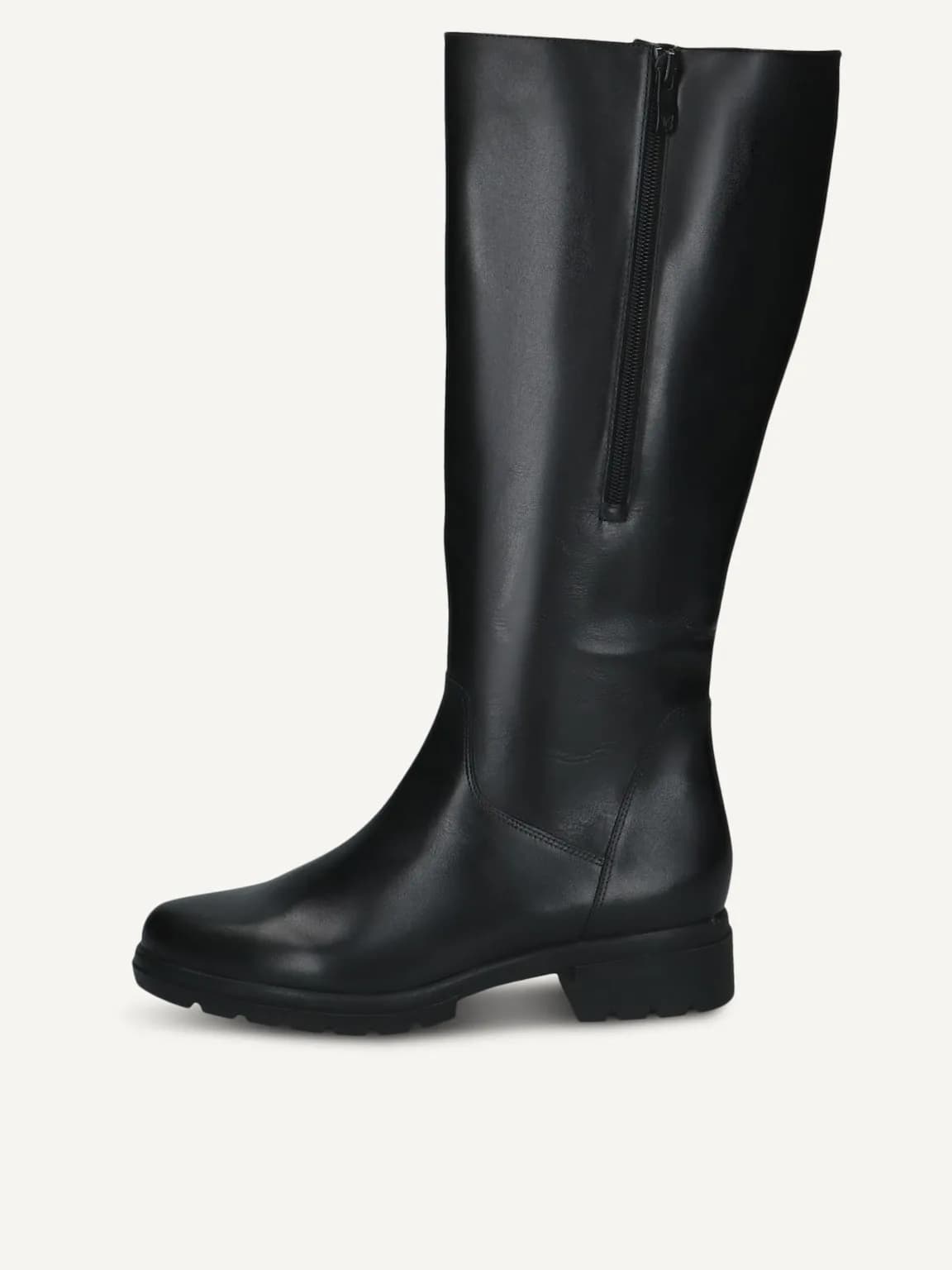
Width is where ranges differ most. The CAPRICE size guide says the collection generally includes only width G and width H. In the brand's words, G is normal to slightly above average, while H gives more room around the ball of the foot (the widest part). The brown leather boot's product page lists H-width, so check the guide first.
Timing and testing matter too. The CAPRICE fitting tips page suggests trying shoes on in the afternoon or evening, when feet tend to be at their largest, and wearing the socks you will wear every day. It also says to stand and walk in them, preferably on carpet at home. How do you know the fit is right? Walk the length of a hallway and back.
A width label is a starting point. Let your own test at home have the final word.
Heel height and drop: where the numbers help
Heel height is the number most people check first - start there. Guy's and St Thomas' advises limiting heels to under 4 cm, and the NHS Lanarkshire podiatry page sets the same ceiling.
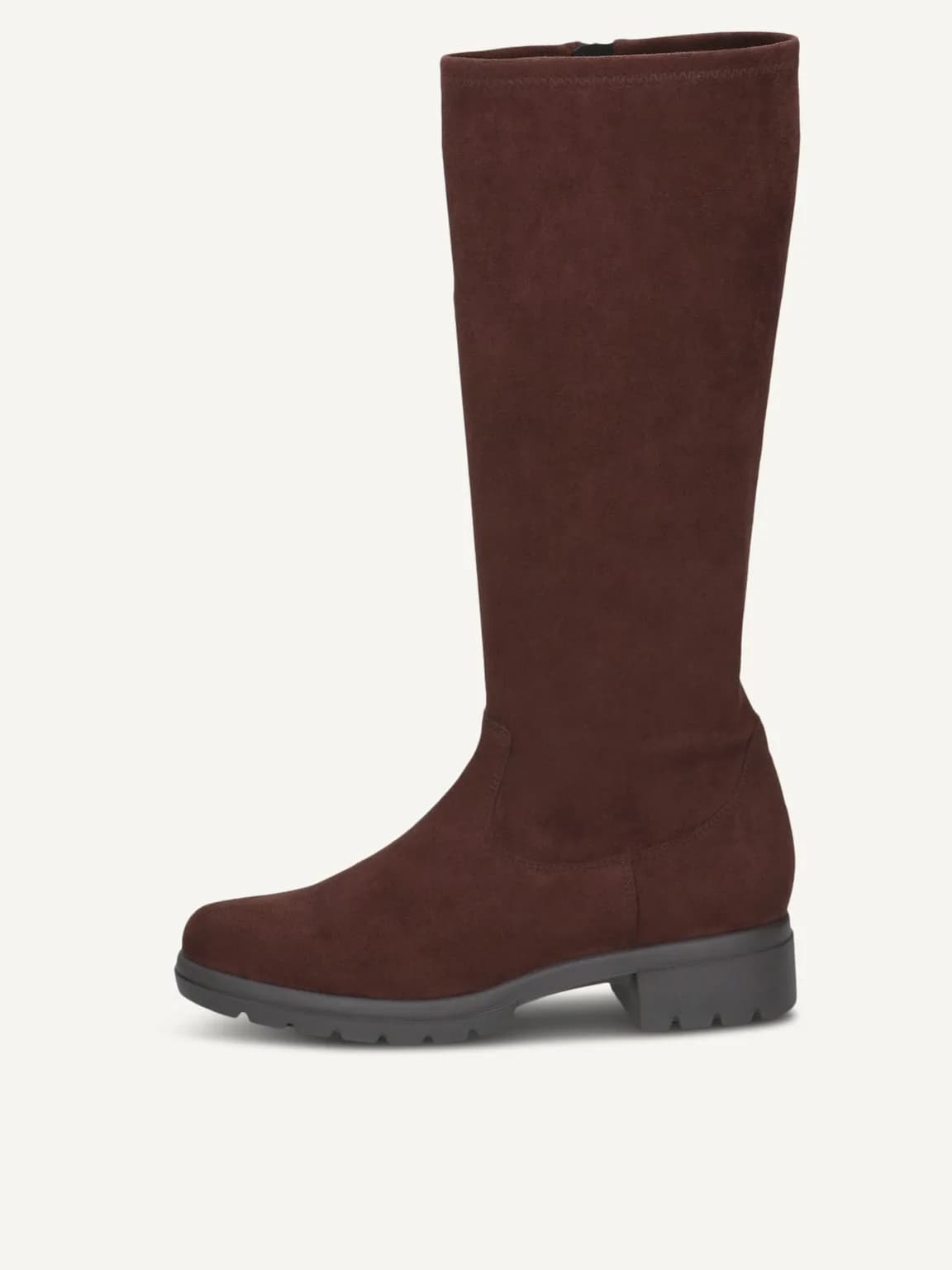
The brown leather boot and the brown textile boot both list a 4 cm block heel. That lands on the limit those pages set, not under it. The same guidance says a wider heel is more stable, and a block heel is wider than a stiletto. Is 4 cm too high for you? That depends on how long you are on your feet.
Drop is the height difference between heel and forefoot, and it changes how far the shoe tilts you forward. The CAPRICE product pages list heel height but not drop, so check the sole itself.
The APMA's advice is practical: moderate heels are fine for special occasions, and it suggests platform or wedge heels instead of stilettos. Low does not automatically mean comfortable, though. The NHS Lanarkshire page warns that a pointed toe box squashes the toes, whatever the heel height.
Sole flex and grip: bend where your foot bends
Where does your foot bend when you push off? That is the spot the sole should follow. The APMA describes the right shoe as stiff through the middle but bending at the ball of the foot.
For shock absorption, the NHS guidance points to thickness. Guy's and St Thomas' says hard surfaces like pavements are unnatural for feet and recommends thicker soles with soft padding. The Lanarkshire page asks for a thick, shock-absorbing, non-slip rubber sole, and calls a rocker, a curve at the front of the shoe, beneficial for push-off.
Grip is harder to judge from a listing. The product page for the brown leather boot describes a GRIP sole with lamella technology and concave-shaped GRIP shells, and says this gives better traction on various surfaces. That is the brand's own claim, and the page cites no independent slip test.
The same page lists a removable footbed and a memory-foam MEMOTION footbed. Removable is the practical part: the Lanarkshire page says a shoe needs room for prescribed insoles, and a removable footbed makes that easier. Does a memory-foam footbed keep its shape for years? The page does not say, so ask the brand before you count on it.
Upper materials and lining: leather, suede or synthetic
The NHS guidance asks for leather or breathable synthetic uppers, because they let air move around the foot. Guy's and St Thomas' warns that plastic or synthetic materials can stop sweat evaporating and make feet hot. Which material suits your week? That depends on the weather and how much care you will give.
Leather is a natural material, and the CAPRICE fitting tips page says it is generally elastic, so the upper may widen over time. Plan for a little give, but do not count on it to fix a pinch.
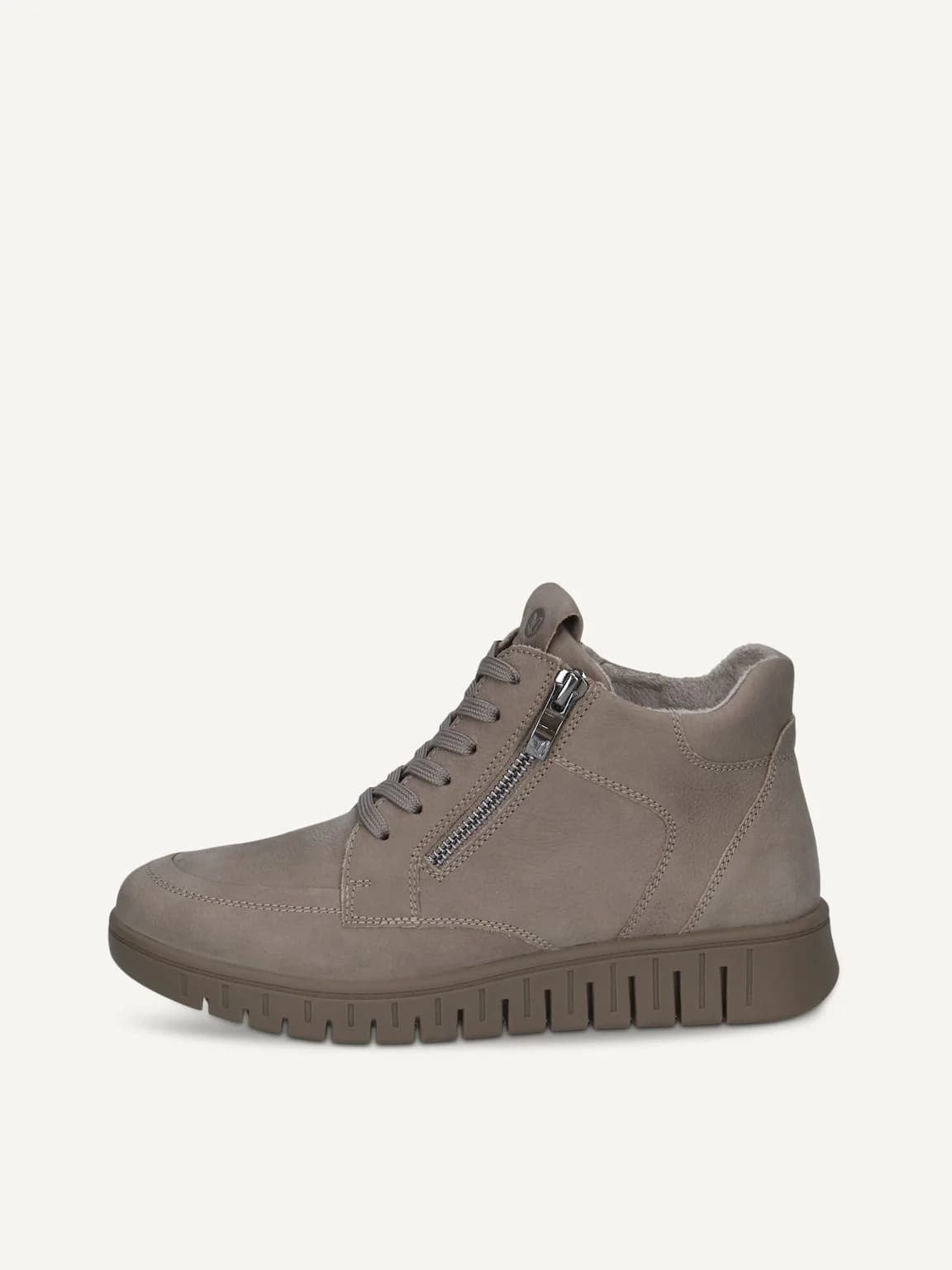
Nubuck and velour need more attention. The brand's care page says to brush nubuck first, dab on a nubuck product from heel to toe, then brush again once it has dried to bring the fibres back up. Light velour needs a brass-free brush, because brass bristles can turn it green.
The lining is the layer you do not see. The CAPRICE product pages list the inner material as a textile and synthetic material blend, and the listings do not say how breathable it is. The NHS Lanarkshire page asks for a soft upper with no hard seams or ridges, and warns that rough seams or linings can increase friction on prominent joints.
Care keeps the shape you bought
The CAPRICE care instructions ask for three basics: a protector spray before the first wear, a shoe tree for leather, and storage somewhere dry and ventilated. For leather and textile shoes, the page says to spray three times in a row from about 30 cm, with 15 minutes of drying between coats.
Wet shoes need patience: the care page says to dry them slowly at room temperature, away from strong heat, to keep soft leather supple. What about cleaning? Brush off coarse dirt first, then use a damp cloth and cleaning foam for heavy soiling.
Care cannot fix a poor fit. If a shoe does not feel right on the first try, Guy's and St Thomas' advises against relying on breaking it in. Care keeps a good shoe in shape. It will not turn a tight shoe into a comfortable one.
If pain continues in a shoe that fits well, see a podiatrist rather than trying shoe after shoe. A podiatrist can look at your feet and the way you walk, which no article can do. The APMA also advises replacing shoes when the tread or midsole shows uneven wear.
The verdict
For daily city walking, the brown leather CAPRICE boot is the strongest match for the points above. It has a leather upper, a removable footbed, H-width, and a sole whose grip the brand describes in detail.
Buy it if it fits your larger foot in the late afternoon, with your everyday socks, and feels right when you walk on carpet at home. Skip it if the toes pinch, because no later care will fix that.
The one real downside is the heel. At 4 cm it sits on the limit the NHS pages set, not under it. If you have been advised to keep heels lower, look for a flatter pair before you buy.
Key specs
- Upper material
- Leather
- Heel
- 4 cm block heel
- Shoe width
- H-width
- Shaft height
- 37.5 cm
- Closure
- Zip fastening
- Inner material
- Textile and synthetic material blend
- Outsole
- Synthetics
- Removable insole
- Yes